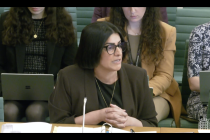
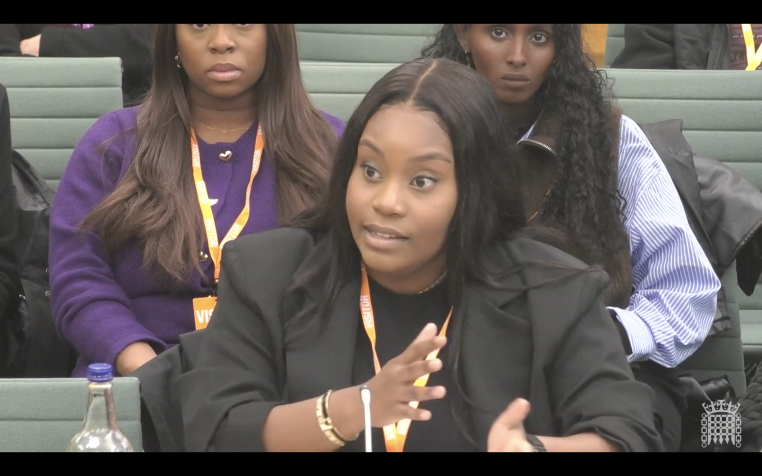
Earlier this month, We Belong was invited to provide evidence regarding the impact of proposed changes to routes for settlement on children and young people.
This session was part of a series conducted by the Home Affairs Committee, which was tasked with gathering supporting evidence for the Home Office’s consultation following their public inquiry related to the Immigration White Paper released last summer.
According to the Chair of the Committee, these proposed changes have generated unprecedented public interest, with almost 6,000 submissions expected to provide evidence in support of the Home Office wider consultation.
The evidence was presented by We Belong alongside children's charities and legal providers, including Anna Skehan, Legal Practice Lead at the Migration and Refugee Children’s Legal Unit from Islington Law Centre; Michelle Lee-Izu, Chief Operating Officer of Children’s Services at Barnardo’s; and Solange Valdez-Symonds, CEO of the Project for the Registration of Children as British Citizens.
The witnesses were questioned about the experiences of young people and children currently navigating the UK’s immigration system and its routes to settlement. Anna Skehan explained that these routes are not tailored to the realities faced by children, despite nearly a quarter (23%) of individuals currently on routes to settlement being children and young people.
She highlighted that existing routes to settlement are burdened with high Home Office application fees, which must be paid every 2.5 years and exceed £3,000, regardless of the applicant's age. With many of these applicants being children without the means to earn income to pay these fees.
We Belong’s official figures reflect Home Office Fees have spiralled to £3,927.50 (excluding legal fees), a 553% increase over the last decade. Although there is a fee waiver process for Limited Leave to Remain Applications, it does not extend to applications for Indefinite Leave to Remain or permanent settlement.
Skehan indicated that the immigration routes are so complex and the applications so demanding that it is difficult to imagine young people being able to submit an application without the support of an immigration lawyer. The consequences of mistakes or technical errors in an application can be severe, resulting in the loss of lawful status and restarting the clock on their route to settlement.
Chrisann Jarrett MBE, CEO of We Belong, also commented that the impact of settlement routes could apply to an estimated 330,000 children, as determined by research by We Belong and the Greater London Authority (GLA) in 2019. She spoke about the barriers to education, explaining how young people must repeatedly clarify their need to renew their status every 2.5 years to universities and employers.
Chrisann also emphasised the effect of this uncertainty on young people's mental health, describing how these children live their lives ‘in limbo’ due to an immigration system that has left them feeling unwanted, describing it as a “state-imposed unwantedness.”
She ended with seeking clarity on whether the proposed changes will keep the 5 year route to settlement which has served as a lifeline to young people who have lived in the UK most of their lives and allows them to achieve a fairer route to settlement, after a concession made by the Home Office in 2022.
A new analysis by the IPPR confirms the amount of young people and children in this cohort. They state that under the current proposals more than 309,000 children already living in the UK could face a wait of 10 years or more before securing settlement. And that this would create deep uncertainty for families and significant obstacles to entering higher education.
The session concluded with the witnesses emphasising that a longer route to settlement will prove inefficient to the Home Office and will create higher risk of people falling out of legal status. Echoing We Belong’s response to the consultation; Stating that ‘the more uncertain the path to settlement (due to length of time or unaffordable costs), the less able a young person is to fully contribute to their community and wider society.’
The MPs thanked the charities and legal service providers for their contributions and that they would bring up these points in questioning the Home Secretary on the Work of the Home Office the following morning.